
 By Elena
What is a Trade War?
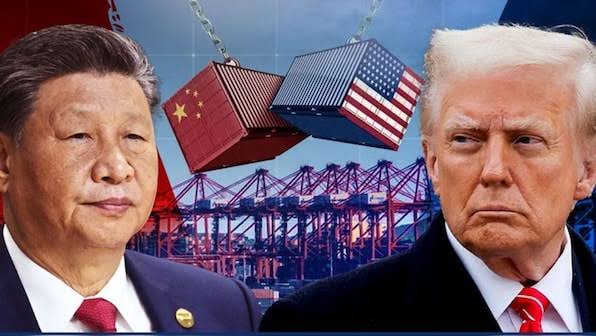
A trade war is like economic arm-wrestling between nations.
- What is a Trade War?
- Why is China in a Trade War with the US?
- What is the Current US Trade Deficit with China?
- Historical Analysis: US-China Trade War 2018
- Which Countries Benefitted from the US-China Trade War?
- Is This Trade War Paving the Way for WW3?
- US-China Trade War Summary
It kicks off when one country slaps tariffs on imports, and the other country hits back with its own.
This isn’t just about taxes—it’s about control, influence, and protecting homegrown industries.
But the fallout doesn’t stop at government desks; it trickles down to prices, jobs, and global supply chains.
When the world’s biggest economies get petty with tariffs, the entire planet feels the burn.
Why is China in a Trade War with the US?
It’s not just about dollars—it’s about dominance.
The US believes China has been gaming the system for years by undervaluing its currency, stealing intellectual property, and subsidizing state-owned companies.
China, meanwhile, views America’s pushback as an effort to block its rise on the global stage.
Both countries want to lead the 21st-century economy—and neither is willing to blink.
So when Trump launched a tariff blitz in 2018, China retaliated hard, triggering the most intense economic standoff since the Cold War.
What is the Current US Trade Deficit with China?
The numbers don’t lie, and the gap is still massive.
As of late 2024, the US trade deficit with China hovered around $279 billion—yes, billion with a B.
That’s actually down from its 2018 peak, but still a serious sore spot in Washington. Why?
Because a trade deficit means the US is buying way more from China than it’s selling back.
Critics say it drains American jobs and feeds China’s economic muscle.
Supporters argue it’s just how global supply and demand works now.
Historical Analysis: US-China Trade War 2018
Back in 2018, Donald Trump decided enough was enough.
Accusing China of economic sabotage, he dropped tariffs on $50 billion worth of Chinese goods.
China didn’t flinch.
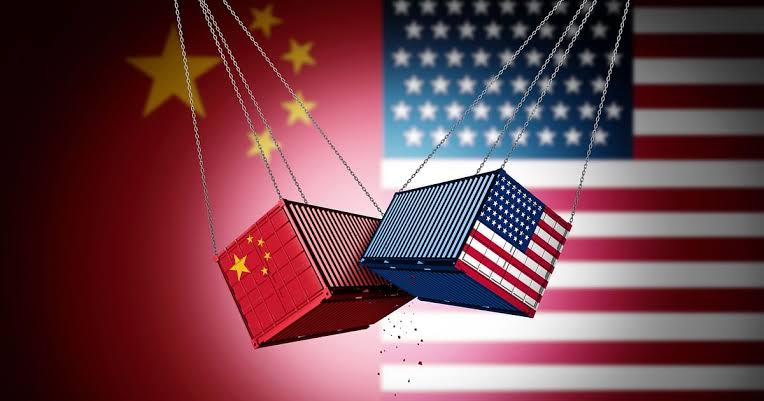
It punched back with tariffs on American soybeans, cars, and whiskey—hitting US farmers and manufacturers where it hurt.
The war escalated fast.
By 2019, over $360 billion in Chinese goods were under US tariffs, and China had retaliated on $110 billion in US products.
Talks happened. Deals were signed. But trust? That got torched.
The Phase One agreement in early 2020 cooled things temporarily—but deep damage was already done.
Which Countries Benefitted from the US-China Trade War?
Trade wars create losers, but also opportunists. And Southeast Asia stepped up fast.
Vietnam saw a huge surge in exports to the US, as manufacturers shifted production out of China to dodge tariffs.
Taiwan, Mexico, and even Bangladesh grabbed a bigger slice of the global supply pie too.
India also tried to woo foreign companies away from China, pushing its “Make in India” campaign hard.
Basically, as the US and China traded blows, smaller economies slid into the power vacuum with a grin.
But don’t get it twisted—most of these gains were short-term and didn’t come without their own baggage.
Is This Trade War Paving the Way for WW3?
Let’s be honest—tariffs alone don’t start wars. But trade tension can inflame already burning geopolitical rivalries.
When you mix economic aggression with military build-up, digital surveillance, and proxy alliances, things get spicy real fast.
The South China Sea? Taiwan? TikTok bans? These aren’t side plots—they’re pressure points.
If war is a cocktail, trade conflict is one of the strongest shots in the mix.
It breeds distrust, decouples economies, and triggers nationalism on both sides of the Pacific.
While WW3 isn’t here yet, the US-China trade war is definitely part of the starter pack.
US-China Trade War Summary
This isn’t just a spat over soybeans and semiconductors.
It’s a tug-of-war over who controls tomorrow.
The US wants to protect its industries, values, and global influence.
China wants respect, growth, and a seat at the top. Neither is willing to back down.
The trade war, now in its sixth year, has outlasted presidents and policy shifts.
It’s reshaping how the world does business—from supply chains to startups.
So, is this a cold war or just economic chess? Depends who you ask.
But one thing’s crystal clear: the US-China trade war is more than tariffs—it’s the economic showdown of our generation.