
 By Elena
In a stunning political move that sent shockwaves through academic circles, Donald Trump froze a staggering $2.2 billion in federal funds to Harvard University.
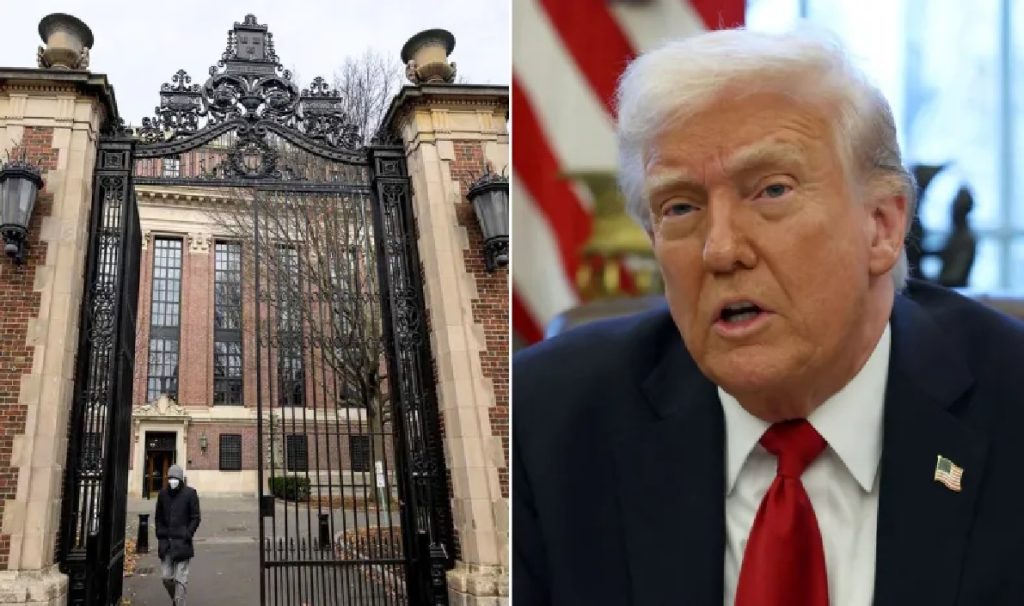
This wasn’t just a symbolic slap on the wrist—it was a calculated power play that shook the foundation of one of the world’s most prestigious institutions.
The Trump administration argued that Harvard had become a hub of “elitist entitlement” and was no longer aligned with American values.
They accused the Ivy League giant of misusing funds, inflating administrative costs, and sidelining domestic students in favor of wealthy internationals.
What began as a budgetary audit spiraled into a full-blown federal crackdown.
And at the heart of it? A debate over fairness, national loyalty, and the soul of higher education in America.
Why US Govt Wants to Freeze School Foreign Student Intake
The Trump administration didn’t just stop at freezing funds. They moved aggressively to clamp down on Harvard’s foreign student admissions.
Why? According to federal officials, it was all about protecting American opportunities.
There’s long been a growing tension over elite universities prioritizing international students who pay full tuition.
The government claimed this practice marginalized U.S. students—especially those from underprivileged communities who couldn’t compete financially.
Officials argued that taxpayer dollars should benefit American citizens first.
By limiting foreign student numbers, they hoped to redirect resources back to the American middle class, which Trump famously vowed to uplift.
What Triggered the Trump Administration’s Crackdown on Higher Education Institution?
So, what exactly triggered this educational earthquake? It wasn’t just about money.
A leaked internal report revealed that several top U.S. universities, including Harvard, had quietly partnered with foreign governments and corporations—raising serious national security concerns.
The administration cited “foreign influence operations” and potential “espionage risks” on U.S. campuses.
Suddenly, elite institutions weren’t just schools—they were battlegrounds in a new kind of cold war.
Add to that public outrage over ballooning tuition costs, alleged mismanagement of COVID-19 relief funds, and accusations of ideological bias in academia—and the stage was set for a major showdown.
What Were the Demands Made of Harvard University?
Before cutting the cord, the Trump administration handed Harvard a detailed list of demands.
First, they were told to disclose all foreign funding sources—from governments, think tanks, and private corporations.
Transparency was non-negotiable.
Second, the university was urged to reform its admission policies to prioritize domestic students, especially those from rural and low-income backgrounds.
The administration also pushed for more curriculum balance, suggesting Harvard had drifted too far left politically.
And finally, they wanted stricter oversight of Harvard’s endowment spending.
With a fund north of $50 billion, the White House questioned why the university still relied heavily on federal grants.
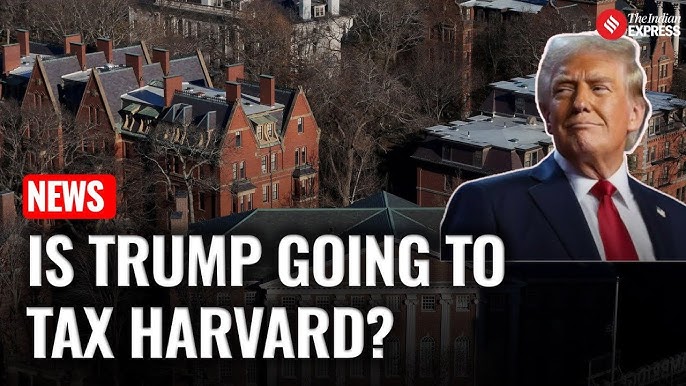
Does Harvard Pay Taxes?
Let’s talk money—does Harvard actually pay taxes? Short answer: not really.
As a non-profit educational institution, Harvard enjoys broad tax-exempt status under U.S. law. That means its massive endowment earnings are mostly untaxed.
Critics have long argued this is unfair.
With an endowment larger than the GDP of some countries, Harvard behaves like a hedge fund with a lecture hall attached.
Yet it’s still treated like a charity.
Trump’s move to freeze federal funds was partly a protest against this system.
He demanded that wealthy institutions like Harvard contribute more to the national tax base, especially if they want continued federal support.
Did Donald Trump Go to Harvard University?
Now here’s a juicy twist—Donald Trump never went to Harvard.
He graduated from the Wharton School at the University of Pennsylvania, another elite but less liberal institution.
Trump has always had a love-hate relationship with Harvard.
While he acknowledges its academic prestige, he’s often criticized it for being elitist, overly progressive, and disconnected from the realities of working-class America.
Some insiders say his decision to target Harvard was personal—a symbolic stand against the establishment that never truly accepted him.
That being said true or not, his actions certainly left a mark.
Is Harvard the #1 School?
Ah, the million-dollar question—is Harvard really the best university in the world? That depends on who you ask.
By global rankings, Harvard consistently lands in the top three. It boasts legendary alumni, a jaw-dropping faculty list, and unrivaled research output.
From Nobel laureates to presidents, its influence is undeniable.
But critics argue that “#1” status isn’t just about reputation.
Rising tuition, lack of socio-economic diversity, and political bias have led many to question Harvard’s dominance.
Some say schools like MIT, Stanford, and Oxford have surpassed it in innovation and access.
Still, there’s no denying Harvard’s cultural and academic clout. It’s a brand, a status symbol, and a historical powerhouse.
The pressure on Harvard wasn’t just about one school.
It was a message to all elite institutions: be more transparent, be more inclusive, and be more accountable.
And as higher education stands at a crossroads, one thing’s clear—Freeze School wasn’t just about chilling Harvard’s bank account.
It was about thawing out the truths that had been frozen in place for far too long.